
I’ve always admired teachers. As a young mom, I tried tutoring my kids. I failed. I wasn’t patient enough, and my kids knew how to push my buttons. It was a disaster.
The heroes of my younger years were mostly teachers. Soledad Reyes, who unboxed for me the nuts and bolts of writing English, easily comes to mind. Father Roque Ferriols is another. I spent many an afternoon listening to him dissect the essence of being in Filipino. It was magic.
On any ordinary day, a teacher’s task is challenging; on lockdown, it is downright Herculean.
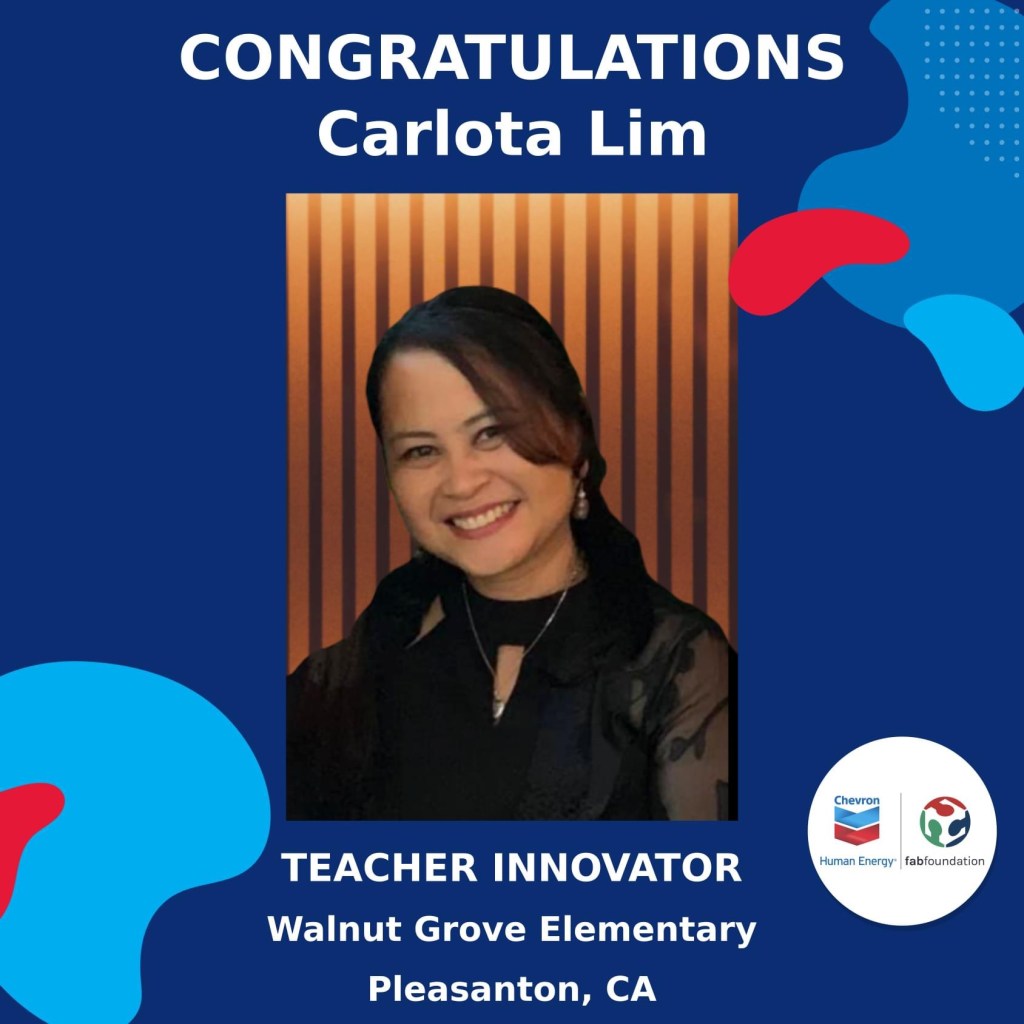
One such teacher is Cay Salem Lim, who has been molding young minds for more than three decades. A recipient of the 2020 Teacher Innovator Award of Chevron and the Fab Foundation, Cay was recognized for maximizing the use of technology to keep her third grade students challenged and engaged. She used 3D modeling and simulations to illustrate animal life cycles and made video lessons revolving around her hydroponic garden about plant life.
She also happens to be a friend from college, and I am so proud of her!
As it turns out, Cay discovered the joy of teaching while in college, during a group presentation.
She recalls, “I was the very shy type, always sitting in the back of the room, never participating in class discussions. So naturally, I was extremely nervous and anxious about this day. Once I started speaking however, everything fell into place. I felt like I had command of the room, and every classmate of mine was listening, nodding, and engaging in eye contact. Words came out of me smoothly and clearly, and I thought, ‘Hey, I can do this pala!’”
She would find herself joining the Ateneo Catechetical Instruction League (ACIL). And on weekends, she and her fellow catechists would commute to San Mateo, Rizal, and teach kids under the shade of trees, on the side of the road, or wherever they can sit and gather. Cay says, “I loved seeing the kids’ attentive and smiling faces!”
Seeing how a child’s face lights up at the discovery of something new has always been the fuel for Cay’s vocation. She adds, “I also cannot think of any other job where I can learn history, write and publish stories, and do poetry with the kids, read amazing literature, 3D-print geometric shapes for Math, do a Facetime call with an astronaut, sing Broadway tunes on my piano in the classroom, dance together for brain breaks, do kids’ yoga at recess, and visit the Zoo for Science all in one day!”
It also thrills Cay no end — and also us when she posts them on her social media — when a student remembers her.
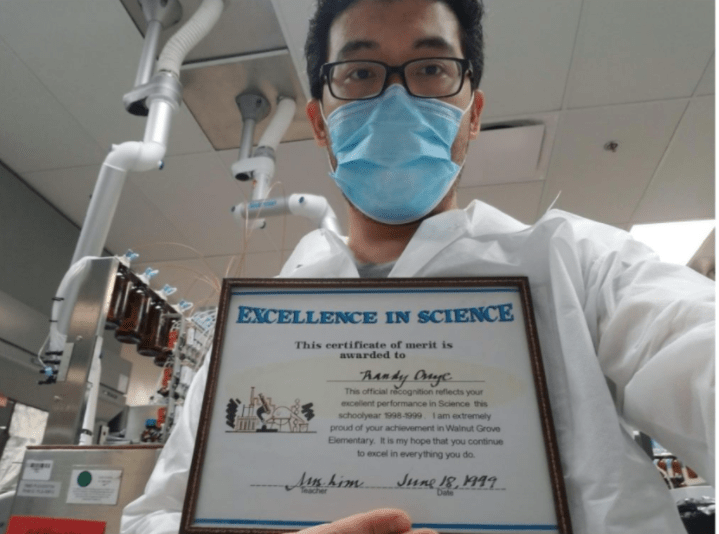
Most recently, one of her students, from 1999, emailed the school secretary to ask about her. Cay says, “He wanted to share the news that he is going into a PhD program in Chemistry this year. He also shared that he kept the Science Award certificate I gave him in 4th grade in 1999 in his lab at Roche.”
More significantly, her student, who is now 31 years old, was part of the team that developed the COVID diagnostic test. Too cool!
Teaching online brought a new set of challenges.
Since her students can’t be in the classroom, Cay asked for the support of their parents who would not only make sure the kids attended the class but also complete their homework. It also took some time before the kids got comfortable with the Zoom environment, but eventually settled in.
Making her lessons interactive and meaningful required tedious and meticulous planning.
She explains, “You have to make your lessons and activities extra interesting and engaging, otherwise, you are just like a TV that kids can and want to turn off.”
“For example, when I was teaching about science, I demonstrated the life cycle of a plant using my hydroponic garden in the backyard. Same for the life cycle of a bird, we not only watched videos or read Science pages about it, but we monitored a nest with six eggs in my backyard. My students watched with glee as I showed them on camera these beautiful blue green eggs in the nest as they grew and hatched. Instead of simply drawing polygons and 3D shapes in their math notebooks, my students designed their geometric shapes on TinkerCad and MakersEmpire. I then took their .STL design files and printed them into pendants for necklaces.”
Of course, these activities didn’t just happen. Cay spends hours doing research, creating lesson plans, and incorporating video lessons using Screencastify, WeVideo and YouTube. She then organizes and posts daily lessons on Google Classroom. She also collaborates online with teachers and watches tutorials for new technology and teaching apps.
She says, “Like in the field of medicine, teachers have to keep up with new educational technology… I am lucky that I could get by with only three to four hours of sleep — one of the habits I picked up living in the dorm in college.”
But as much as Cay has settled comfortably with technology, Zoom fatigue is real. She adds, “I also miss being with the kids in the same room. Teachers need more time away from their families and homes to plan, create, and engage students. Students also get away with cheating unfortunately. This is a bigger problem in the high schools during exams, but I did catch my one savvy 3rd grader thinking she was on mute during our Zoom Math quiz: ‘Alexa! What is 9X7?!’”
Despite these challenges, the pandemic has revealed for Cay the strength of humanity. She says, “Humans are resilient. Kids are resilient, amazing and hardworking. Parents are frustrated and overwhelmed juggling working from home, chores, dealing with family dynamics and other stressors, but are still generally very supportive and kind.”
Thank you for your service, Cay and for all teachers in our world locked down.
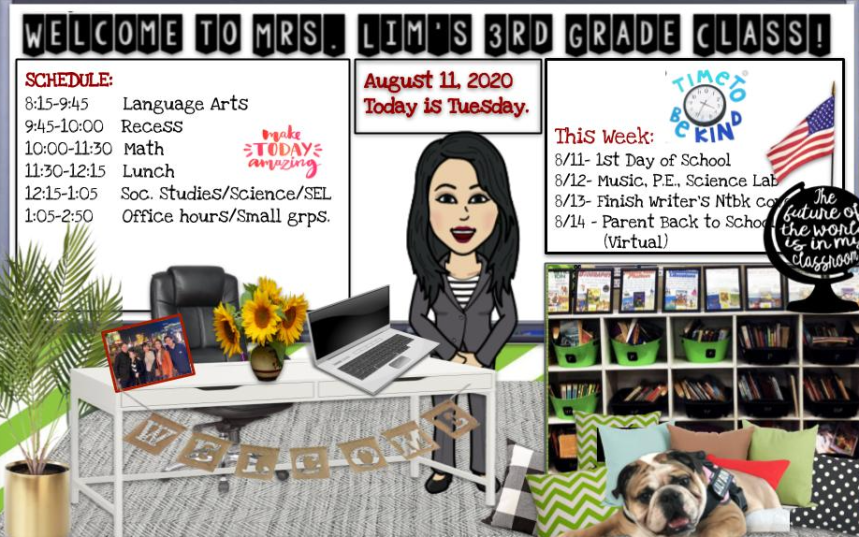
Photo by Vlada Karpovich from Pexels



 LULA LAND
Leave a comment